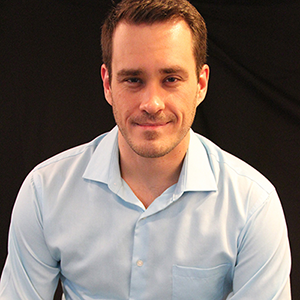
In the days following the Charlie Kirk assassination, I determined that I would do something I had been wanting to do for some time…start a show where I discussed politics and Christianity, with a focus on logic and reasoning.
This is the start of that show.
The Joshua Farley Show explores political issues, current events, and cultural direction from a logical standpoint. Joshua blends common sense with theological and philosophical perspectives, while analyzing cultural issues with a focus on building stronger cultural foundations for the next generation.
Some episodes center on public issues, while others examine faith, ideas, and cultural pitfalls. The goal is thoughtful discussion that helps strengthen the culture, rather than simply react to it, ultimately shifting thought back toward balance and sanity for a better tomorrow.
If you believe building a better future means learning from the past, protecting freedom, seeking truth-based stability in a culture that often feels off course, and appreciate thoughtful discussion shaped by values rooted in faith, logic, and tradition — especially when dominant cultural narratives seem increasingly disconnected from common sense — you’ll likely resonate with this podcast.
In the days following the Charlie Kirk assassination, I determined that I would do something I had been wanting to do for some time...start a show where I discussed politics and Christianity, with a focus on logic and reasoning.
This is the start of that show.
– – –
Episode 1: Why I Started This Show
Hello. After spending quite a while setting up the studio down here, it’s been quite a journey, and I’m happy to announce that I’m starting a podcast, videocast, and general broadcasting. Some episodes will be just me sharing thoughts, and others will be interview-style conversations.
So in today’s episode — episode one — I want to talk about why I started podcasting and doing more video content. In the past, I mostly shared interesting things I found and occasionally made some of my own videos. Part of this shift is simply wanting to get more comfortable on camera and share more of my own thoughts instead of just echoing other content. That said, I’ll still share things I find useful or interesting when it makes sense.
One of the biggest reasons I decided to move into podcasting and broadcasting more seriously was the assassination of Charlie Kirk. I made the decision within a few days of hearing about it. The idea had been developing for a while, but since shortly before Christmas I’ve really been laying the groundwork and building out this studio.
Going back to Charlie Kirk for a moment — there was something he said once that stuck with me. I don’t remember exactly where he was speaking, but I later saw the video again. He was talking about what he called “woke ideology” and said that many younger people were starting to question it. Then he made a statement that really stayed with me: he said the left often has no real arguments and struggles to defend its positions.
When I heard that, I immediately thought about my own experience discovering logical fallacies when I was about 33 years old. Many people know about them, but unfortunately this material usually isn’t taught in school. I certainly didn’t learn it there. Studying logic changed how I think. It helped me recognize flawed reasoning in advertising, conversations, debates — everywhere. Often people don’t even realize they’re using faulty logic, like circular reasoning and other fallacies that show up constantly.
To me, logic forms a foundation for pursuing truth. Without sound reasoning, it’s hard to be confident in what we believe. So when Charlie made that comment about arguments and defensibility, it connected directly with how much logic had influenced my own thinking.
Over time, I’ve noticed that many people simply aren’t strategic about how they think. We grow up assuming that because we have a brain, we naturally know how to reason well. But logic and reasoning are disciplines. They should almost be treated like sciences. Many people just don’t want to put in that extra effort to learn them. They assume finishing school means they already know how to think effectively.
At the same time, society feels increasingly polarized. Personally, I believe stronger grounding in logic and reasoning could help reduce that divide. It’s extremely difficult to reason productively with someone who doesn’t have those tools. You can understand logic perfectly, but if the other person doesn’t, conversations can go nowhere.
That’s part of why I want to emphasize these topics in future episodes. I want to explore how we argue, how we defend positions, and how we present ideas in ways that can actually be examined logically. It’s not enough just to state beliefs; we should be able to demonstrate why we hold them.
Charlie Kirk’s death was obviously tragic for many people. I had a lot of respect for him and the work he did. I had seen his content for quite a while before following him. At first, I thought of him mainly as someone working with college students, which wasn’t exactly my age group, so I didn’t pay as much attention. Later I realized how much influence he was actually having.
When I reflect on all this, I sometimes wonder whether stronger public understanding of logic and reasoning might reduce some of the tensions we see today. I’m not saying that would solve everything, but it might help.
I also believe there’s a gap right now for people who want to engage in conversations about ideas but don’t necessarily fit into youth-focused organizations or campus movements. For many Gen Xers, older millennials, and others beyond the college demographic, there’s a bit of a void. Broadcasting, podcasting, and long-form conversation feel like a natural way for me to step into that space.
I’m also working on a book. It’s written but not finished — there are graphics, formatting, and printing details still to work through — so I’ll talk more about that later. But overall, this podcast is also about personal growth: becoming more comfortable on camera, sharpening communication, and developing ideas publicly.
I’m not extremely camera-shy, but I’m not completely comfortable either, so there’s definitely a learning curve. That’s part of the journey.
This will probably be one of my shorter episodes, but I wanted to get this out there — to explain why I’m starting this. Charlie Kirk made an impression on a lot of people. I think the most meaningful response to a tragedy like that is for people to step up where they feel called — using their own strengths, not forcing themselves into someone else’s mold.
Originality matters. People showing up authentically, using their own gifts, is what strengthens communities. Figuring out where you can make an impact isn’t always obvious. Often it becomes clearer as we get older, care less about outside opinions, and better understand our strengths.
My hope is that through this content I can help people think more clearly, communicate better, and maybe find their own “sweet spot” for contributing.
So please keep me in your prayers. Follow, subscribe, like — whatever that looks like on the platform you’re using.
I appreciate it. God bless.